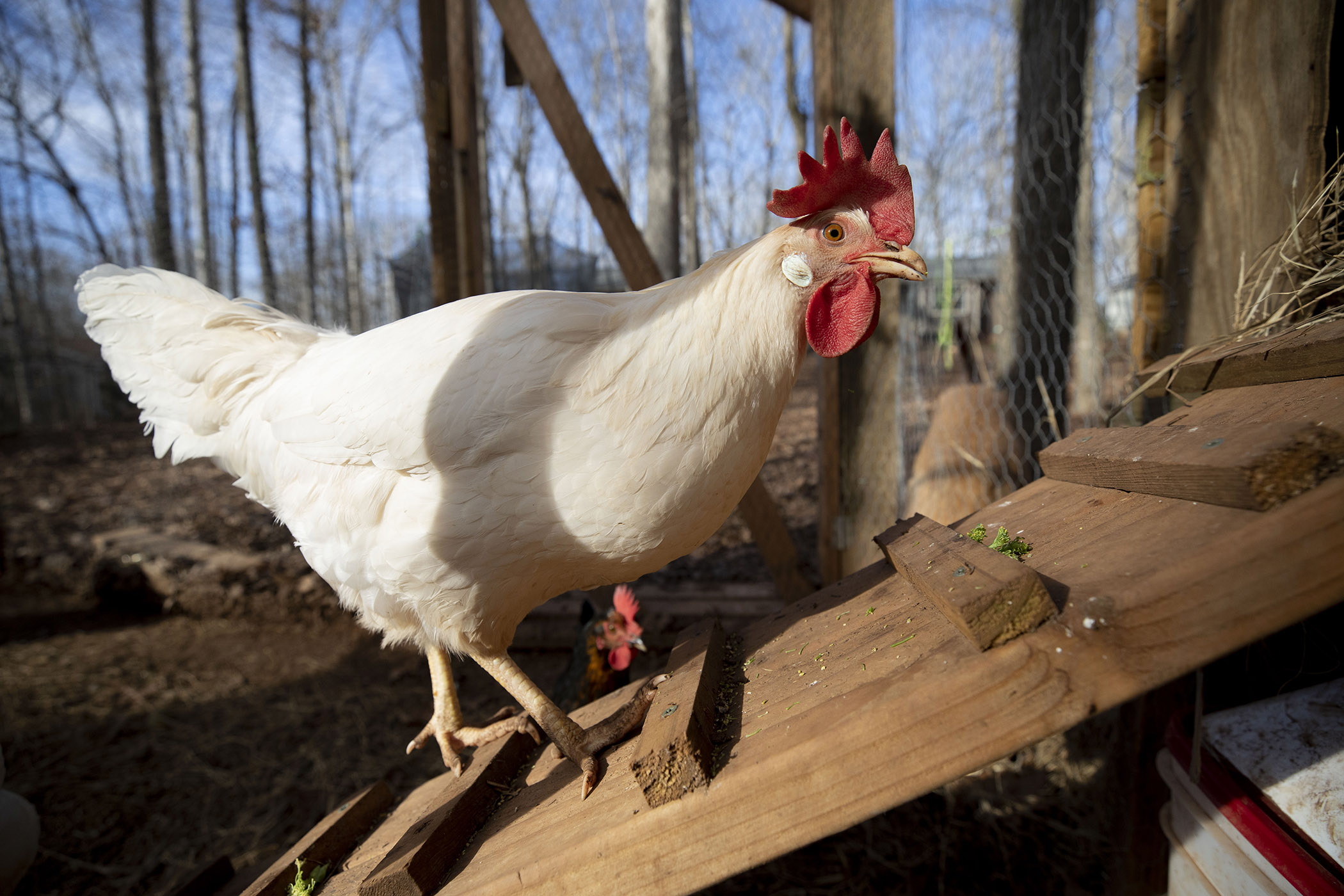

Wild birds come into contact with backyard chicken flocks more frequently than people realize, creating a pathway for pathogens to transmit back and forth, according to new research from the University of Georgia. Such pathways increase the risk for spillover events that can threaten the health of all these groups—wild birds, backyard chickens and the people who care for them.
“Most people probably don’t realize how frequently wild birds come in and take advantage of the food and water that’s put out for chickens,” said Sonia Hernandez, professor of wildlife disease at the Warnell School of Forestry and Natural Resources and the College of Veterinary Medicine. “Wild birds learn that resource, and those contact points can become places where pathogens like Newcastle disease virus and avian influenza virus can be transmitted back and forth.”
For the study, published in Epidemiology and Infection, Hernandez and a team including first author Andrea Ayala conducted a supplemental feeding experiment followed by observations at three sites with backyard chickens in north Georgia. At each site, they identified the species of wild birds that shared habitat with the chickens, were detected more frequently, and entered the coops. The team identified 14 wild bird species that entered the coop to consume supplemental feed and were considered high risk for pathogen transmission.
“Interestingly, seasonality played a role—but not the one that we expected,” said Ayala, a postdoctoral researcher at Yale University who earned a Ph.D. in comparative biomedical sciences at UGA. “We had hypothesized that feeding rates would be highest in winter, but for some species such as blue jays, the opposite was detected.”
Over 60 hours of observation, 1,574 individual wild birds were detected across the three sites, comprising 72 species from 24 families. Tufted titmice (15.6%), northern cardinals (13.2%), Carolina chickadees (7%) and Carolina wrens (6%) were the four most commonly detected species. Tufted titmice and northern cardinals had the highest contact rates with backyard chickens.
There were some surprises in terms of species, according to Hernandez. The sites attracted species that were seed eaters and grain eaters, and also some insectivores.
“The northern cardinals are ubiquitous seed eaters, so we expected them to be frequent, but that’s not the case for the tufted titmouse or the Carolina wren,” she said. “They will eat bird food, but they’re also insectivores and were likely attracted to insects that were attracted to the food.”
©2022 Cox Media Group